By Watson, Niven, Skahen | November 10, 2026
If you’ve been thinking about straightening your teeth, you’ve probably heard of Invisalign. It’s one of the most popular orthodontic options available today. But is Invisalign right for you, and what can—and cannot—it fix in Costa Mesa? At Watson, Niven, Skahen – Comprehensive, Restorative, & Esthetic Dentistry, Dr. James Skahen helps patients understand their options so they can make confident, informed decisions about their smile.
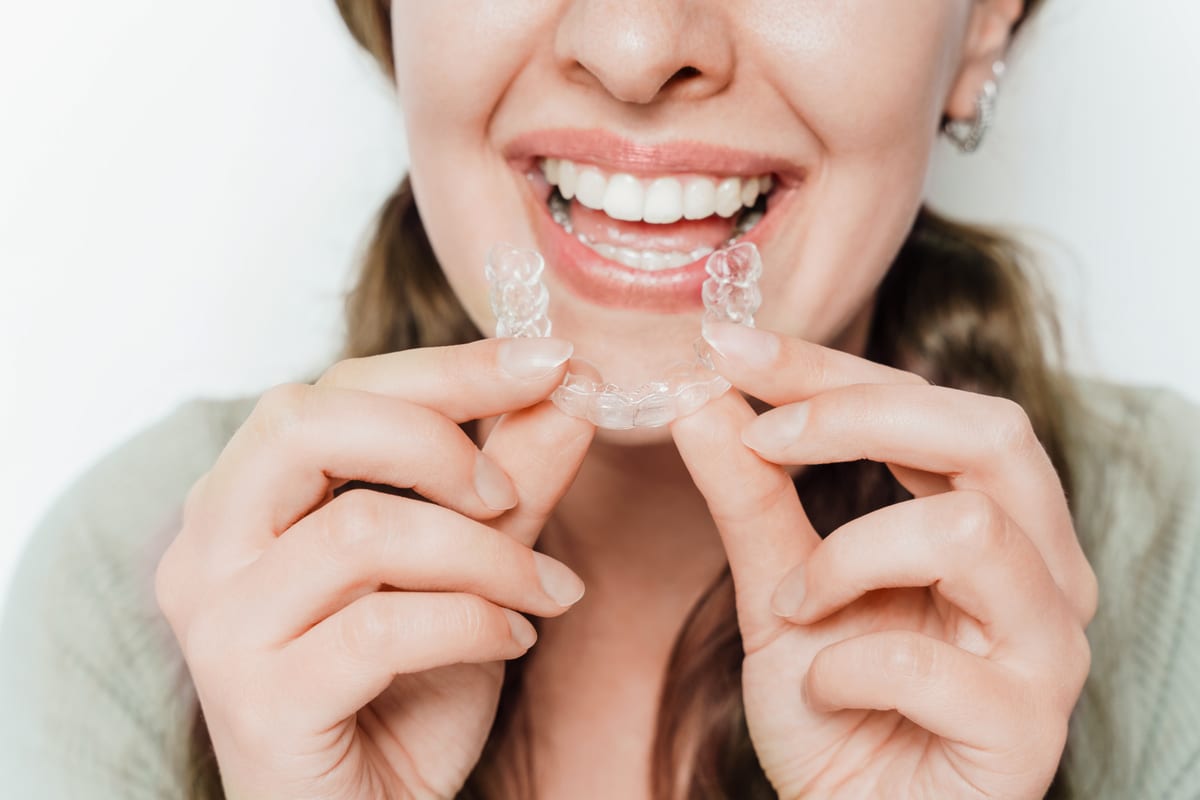
Invisalign uses a series of clear, removable aligners to gradually shift teeth into better alignment. Each set of aligners is custom-made using digital impressions of your mouth. The treatment is discreet, comfortable, and works well for many patients. However, it isn’t the right solution for everyone.
What Invisalign Can Fix: Common Conditions It Treats Well
Invisalign is highly effective at correcting a wide range of mild to moderate orthodontic issues. Understanding what it treats best helps you set realistic expectations before you begin. Here are the most common conditions Invisalign handles effectively:
- Mild to moderate crowding — Teeth that overlap or are too close together respond well to clear aligner therapy.
- Spacing issues — Gaps between teeth can close gradually with consistent aligner use.
- Mild overbite — When upper teeth extend slightly too far over lower teeth, Invisalign can help realign them.
- Mild underbite — Some underbite cases where lower teeth sit in front of upper teeth can be improved.
- Crossbite — When upper and lower teeth don’t meet correctly, mild crossbites often respond to clear aligner treatment.
- Open bite — Cases where upper and lower teeth don’t touch when the mouth is closed may be treatable with Invisalign.
These are conditions where clear aligners deliver predictable, strong results. Your candidacy depends on severity. Mild to moderate cases are typically the sweet spot for Invisalign success.
What Invisalign Cannot Fix: When Traditional Braces Work Better
Invisalign is a remarkable technology, but it has real limitations. Some orthodontic problems require greater mechanical force than clear aligners can deliver. It’s important to understand these boundaries before committing to treatment.
Severe crowding is one of the most common reasons patients aren’t good candidates. When teeth are dramatically misaligned or rotated, traditional braces provide more precise control. Complex bite issues — such as severe overbites or underbites — often need the strength that metal brackets and wires offer.
Significant vertical tooth movements are also more challenging for Invisalign to achieve. Teeth that need to be extruded (pulled down) or intruded (pushed up) considerably may not respond as predictably to aligners. In those cases, braces or a combination approach may be recommended.
Additionally, patients who cannot commit to wearing aligners for 20 to 22 hours per day may not see the expected results. Invisalign only works when it’s in your mouth. Skipping wear time leads to slower progress and can compromise outcomes entirely.
Is Invisalign Right for You? Key Candidacy Factors in Costa Mesa
Several personal factors influence whether Invisalign is a good fit for your lifestyle and oral health. Dr. Skahen evaluates each patient individually to determine the best path forward. Here’s what matters most during a candidacy assessment:
- Age and bone maturity — Invisalign works best for teens and adults whose permanent teeth have fully grown in.
- Oral health baseline — Healthy gums and teeth are essential before starting any orthodontic treatment. Active gum disease or untreated cavities must be addressed first.
- Commitment level — Clear aligners require discipline. You must remove them only for eating, drinking anything other than water, and brushing.
- Complexity of your case — A thorough digital scan and evaluation reveals the severity of your orthodontic issue and guides the recommendation.
If you have minor cosmetic concerns rather than structural bite problems, Invisalign is often an excellent solution. For patients with healthy gums and a mild to moderate case, it offers a nearly invisible way to achieve a straighter smile. Good Preventive Dentistry Costa Mesa habits — like regular cleanings and checkups — also set a strong foundation before orthodontic treatment begins.
Invisalign vs. Other Cosmetic Options: Finding Your Best Fit
Sometimes patients come in asking about Invisalign but discover that another treatment better addresses their concern. If your teeth are already well-aligned but have chips, discoloration, or minor shape irregularities, aligners may not be necessary at all. In those situations, cosmetic solutions can make a dramatic difference.
For example, Dental Bonding Costa Mesa is a quick and cost-effective way to reshape a chipped or slightly uneven tooth without any orthodontic treatment. Veneers and teeth whitening are also worth discussing when the primary goal is aesthetic improvement rather than structural alignment.
Dr. Skahen takes a comprehensive approach to smile improvement. Rather than recommending one solution for everyone, he evaluates what your teeth actually need. The goal is always to achieve the best functional and cosmetic result with the least invasive option available.
If your case does call for Invisalign, the treatment process at our practice is streamlined and comfortable. We use digital intraoral scanners — no messy impressions needed. You’ll receive a clear preview of your expected results before treatment even begins.
What to Expect During Your Invisalign Consultation
Walking into your first Invisalign consultation doesn’t have to feel overwhelming. Dr. Skahen and the team at Watson, Niven, Skahen walk you through every step with clarity and patience. Here’s what a typical consultation involves:
- A full review of your dental and medical history
- Digital X-rays to assess bone structure and root position
- Intraoral scanning to create precise 3D images of your teeth
- A candid discussion of what Invisalign can achieve for your specific case
- A comparison of alternatives if Invisalign isn’t the best fit
There’s no pressure and no rush. The consultation is purely educational. You’ll leave with a clear understanding of your options and what results are realistically achievable for your smile.
Frequently Asked Questions
How long does Invisalign treatment take?
Treatment length varies depending on the complexity of your case. Mild cases may take as few as six months. More moderate cases typically range from 12 to 18 months. Dr. Skahen will give you a personalized timeline estimate during your consultation based on your specific alignment needs.
Can Invisalign fix a severe overbite or underbite?
Invisalign works well for mild bite issues but has limitations with severe cases. Significant overbites or underbites often require traditional braces or a combined orthodontic approach. Your consultation will include a thorough bite evaluation so you know exactly what treatment is appropriate for your situation.
Is Invisalign painful?
Most patients experience mild pressure or discomfort when switching to a new set of aligners. This is a normal sign that the teeth are moving. The discomfort typically fades within a day or two. Invisalign is generally considered more comfortable than traditional braces because there are no wires or brackets.
Do I have to wear Invisalign all day?
Yes — for best results, aligners should be worn 20 to 22 hours per day. You remove them only when eating, drinking beverages other than water, and brushing or flossing. Consistent wear is the single most important factor in achieving the results shown in your treatment plan.
What happens if Invisalign isn’t right for my case?
If your case is too complex for clear aligners, Dr. Skahen will discuss alternative options with you. This may include traditional braces, a referral to an orthodontic specialist, or cosmetic solutions like veneers or bonding if the concern is primarily aesthetic. You’ll never leave without a clear path forward. Book Now to schedule your appointment with our team.